DWP Diary Manager
Redesigning a critical tool behind Universal Credit
Behind every Universal Credit appointment is a considerable amount of coordination.
Diary managers are responsible for organising appointments across work coaches and ensuring that available capacity is used effectively. The existing diary management system made this much harder than it needed to be. It was difficult to use, inefficient and suffered from technical stability issues.
I was brought in to design a replacement: a diary management tool that would be easier and faster to use, more technically robust, and fully integrated into the Universal Credit service.
But before redesigning the interface, I needed to understand how diary management actually worked.
Understanding the service behind the screen
The existing system only told part of the story.
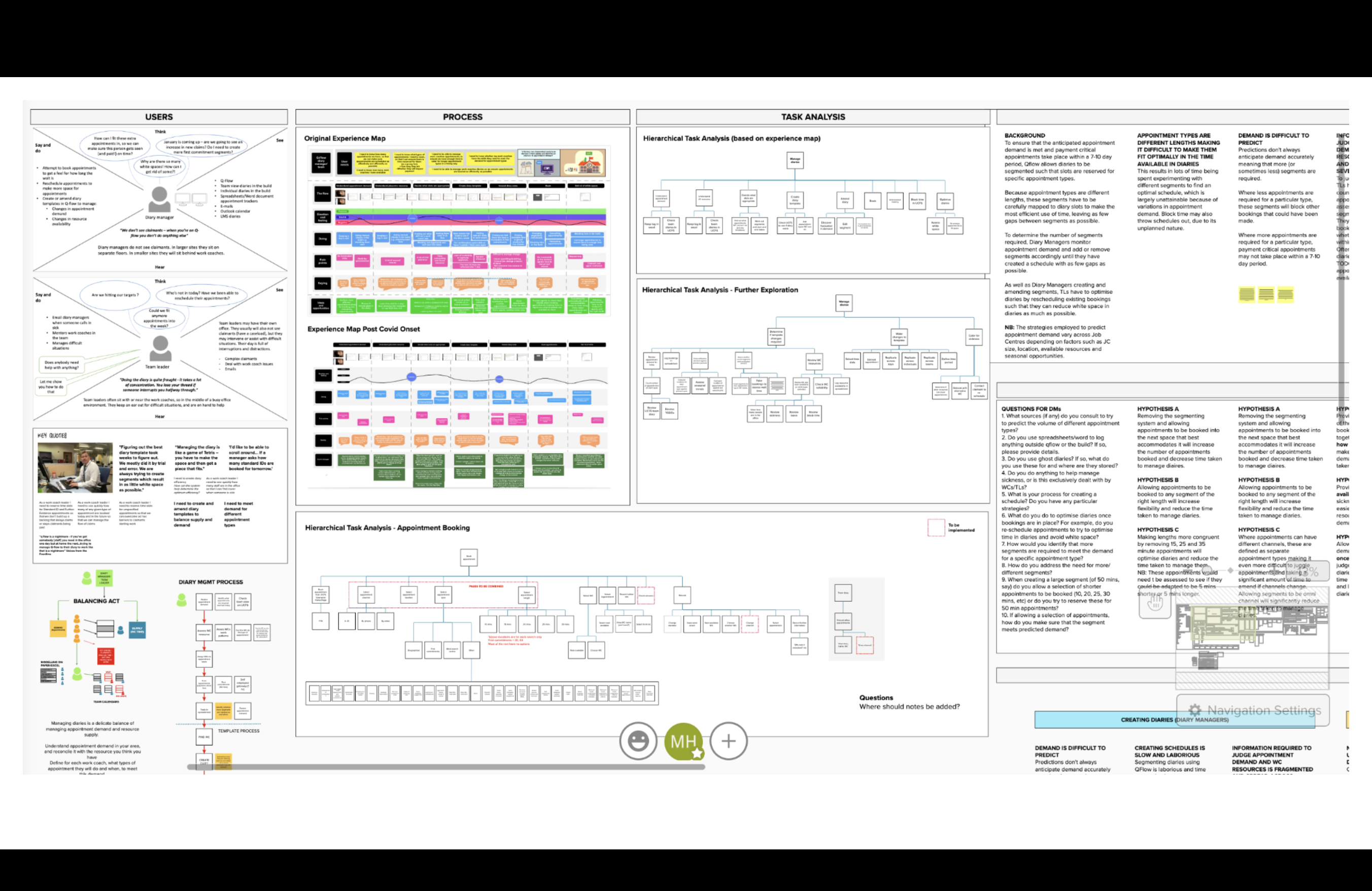
I conducted interviews and shadowing sessions with the people using it, observing how diary managers and work coaches organised appointments in practice and where the existing technology was getting in their way.
Alongside this research, I carried out a heuristic evaluation of the existing interface to identify usability problems and distinguish issues with the UI from problems in the wider workflow.
What emerged was a much clearer picture of diary management as part of a broader service.
The challenge wasn't simply to make individual interactions easier. We needed to help diary managers understand availability, coordinate work coaches and make better use of capacity while completing frequent scheduling tasks as efficiently as possible.
Mapping this wider experience gave the team a shared understanding of where the biggest opportunities for improvement lay.
Designing with the people who did the job
Rather than disappearing to design a solution, I wanted the people who understood diary management best to be involved in creating it.
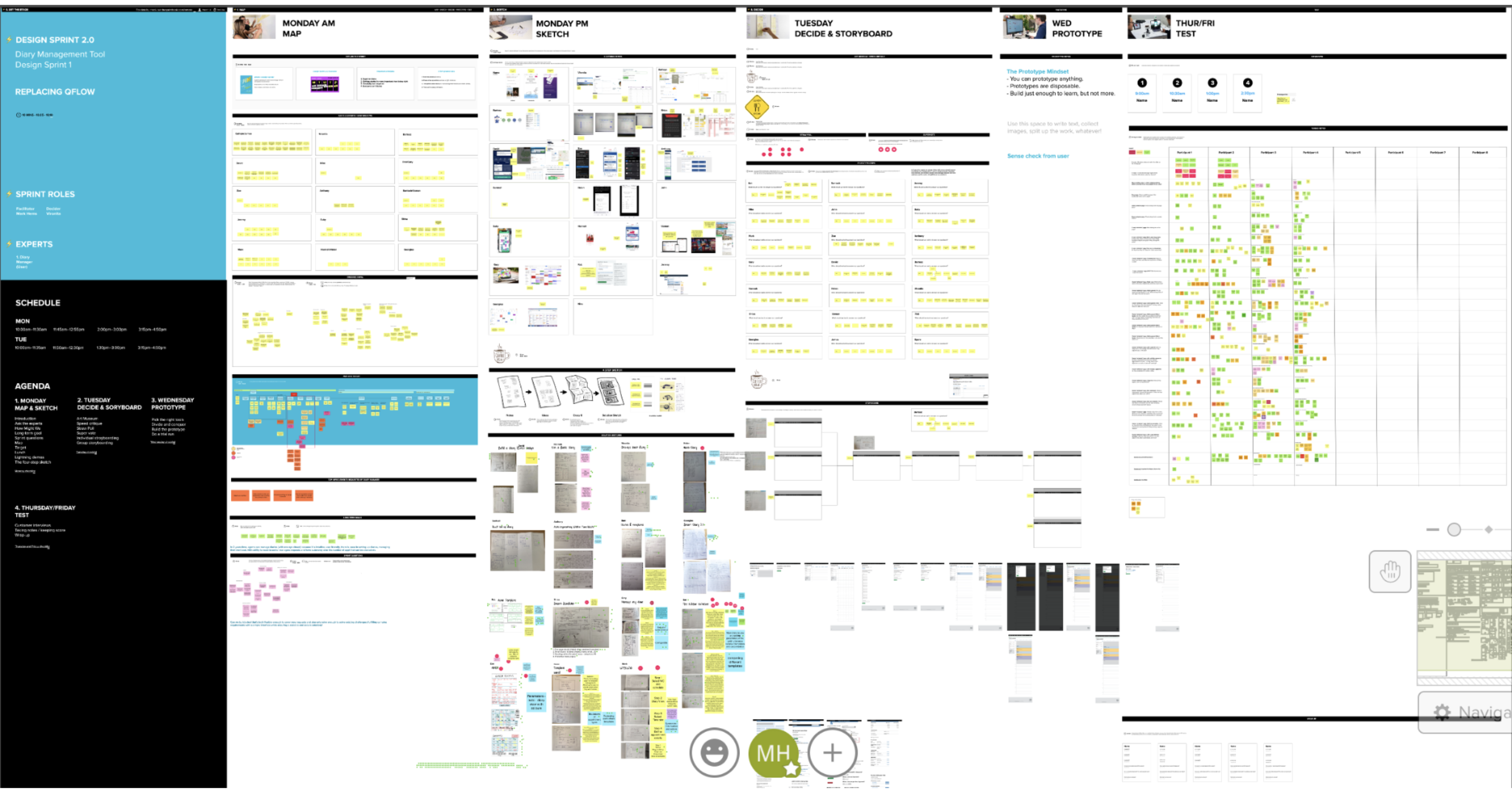
I facilitated a design sprint that brought together stakeholders and real users to explore the problem collaboratively.
We generated and evaluated ideas before developing the strongest concepts into a storyboard for the new experience.
This was valuable for more than generating solutions. It brought operational knowledge directly into the design process and gave the wider team a shared understanding of what we were trying to solve.
It also meant we could challenge assumptions early, before investing time in detailed design.
Testing, learning and iterating
I tested the emerging designs with users through several rounds of usability research.
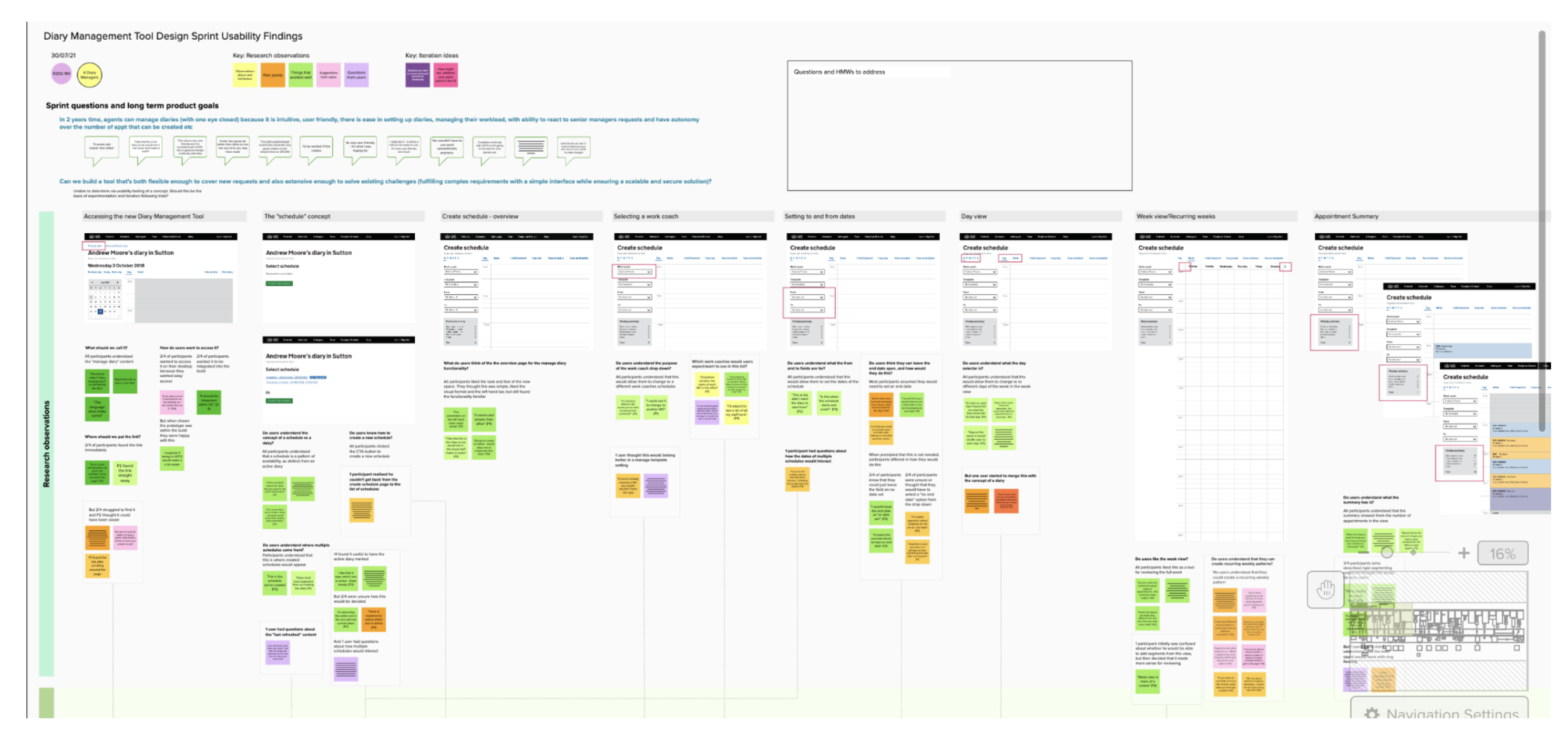
Watching people perform realistic diary-management tasks exposed problems that weren't obvious from looking at individual screens: where information wasn't visible at the right moment, where terminology created uncertainty, or where an interaction added unnecessary effort to something users performed repeatedly.
I captured these findings alongside the relevant interface designs so the relationship between research evidence, design problem and proposed change remained visible to the wider team.
Each round of research informed the next iteration of the prototype.
This created a continuous cycle of designing, testing and refining rather than waiting until the end of the project to validate the experience.
Turning complex scheduling into simple interactions
Diary management looks relatively straightforward until you examine what people actually need to do.
Users needed to work with different work coaches, appointment types, availability and scheduling constraints while maintaining an overview of how diaries were being used.
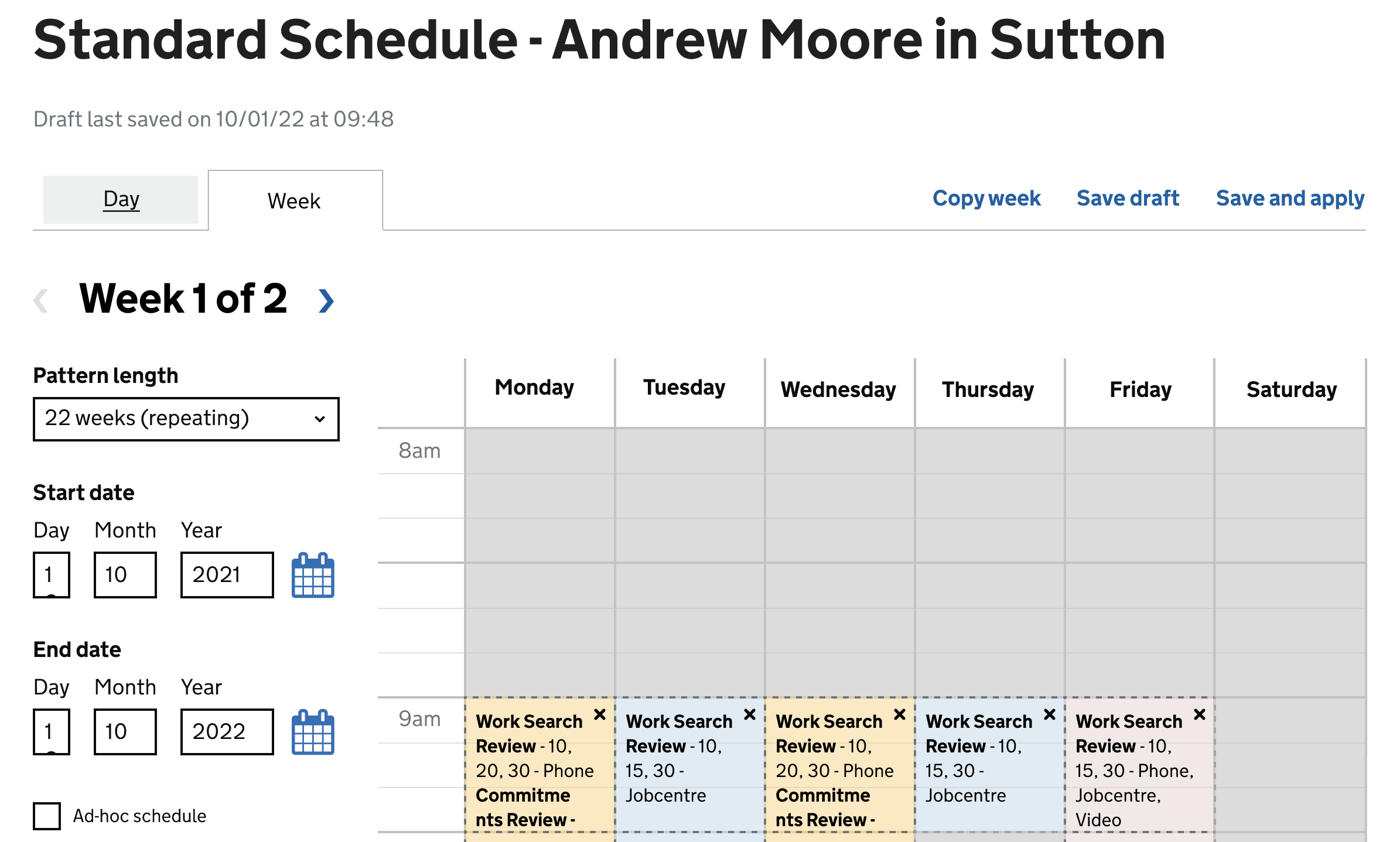
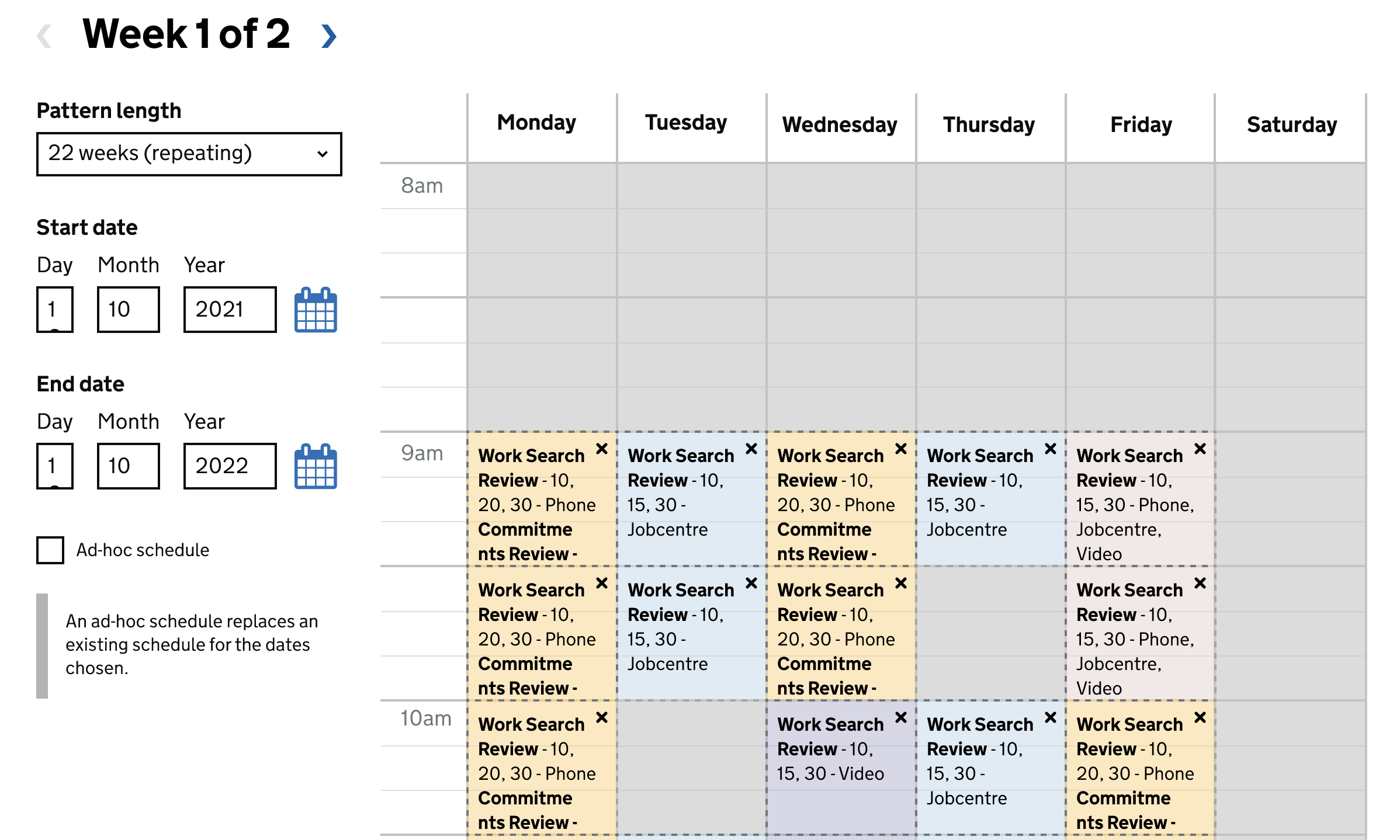
I translated the concepts from the sprint into wireframes and interactive prototypes so we could explore these interactions without committing prematurely to a technical solution.
The aim was to make common scheduling tasks feel simple while still giving experienced diary managers the control they needed.
Rather than treating the prototype as a specification, I used it as a tool for learning.
Deciding what to build first
Research inevitably generated more opportunities than we could deliver at once.
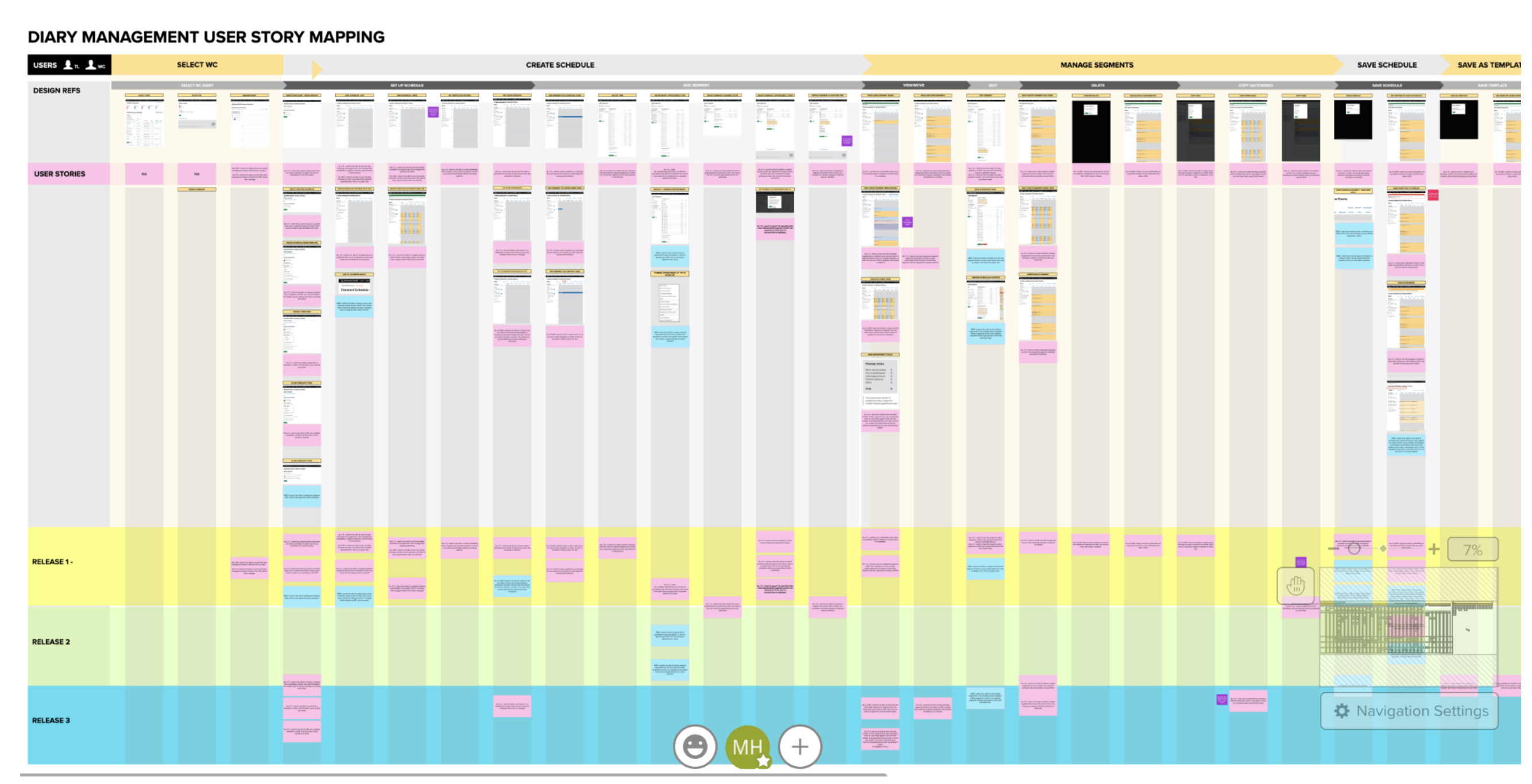
I created a user story map to bring the emerging requirements together and help the team decide what should form the first release.
We considered features in terms of the value they provided to users as well as their implementation complexity, helping us identify a viable first version without losing sight of the longer-term experience.
This also gave designers, researchers, product stakeholders and developers a common view of how the service could evolve beyond the initial release.
Making every appointment easier to organise
The resulting Diary Manager transformed a cumbersome administrative process into a much more efficient part of the Universal Credit service.
Diary managers could organise appointments more quickly and optimise work-coach availability with considerably less effort, while the simplicity of the new experience reduced the amount of training required.
The significance of those improvements went beyond individual interactions.
Diary management is a high-volume activity within Universal Credit. Small reductions in the time required to manage appointments can therefore translate into substantial operational savings when applied across the service.
The programme estimated that the resulting efficiencies had the potential to save government tens of millions of pounds.
For me, the project demonstrated why designing internal services deserves the same attention as designing customer-facing products: making a task slightly easier can have an enormous impact when thousands of people perform it every day.