Emirates Expo
The Challenge
I was employed by Territory Studio to help define six futuristic visitor experiences for Expo 2020 UAE in Dubai, each using different emerging technologies including VR, AR, touchscreens and transparent displays.
The goal was to showcase the airport of the future through immersive, high-impact interactions while ensuring each experience was practical, understandable and usable for a very broad public audience.

Accessibility Assessments
Because the Expo audience would include people from all over the world and across a wide range of ages, abilities and backgrounds, accessibility was a major design concern from the outset.
My first task was to assess the concepts and technologies already in development and provide detailed recommendations to improve usability and accessibility. This took the form of expert reviews covering areas such as navigation, type, contrast, iconography and general interface legibility.
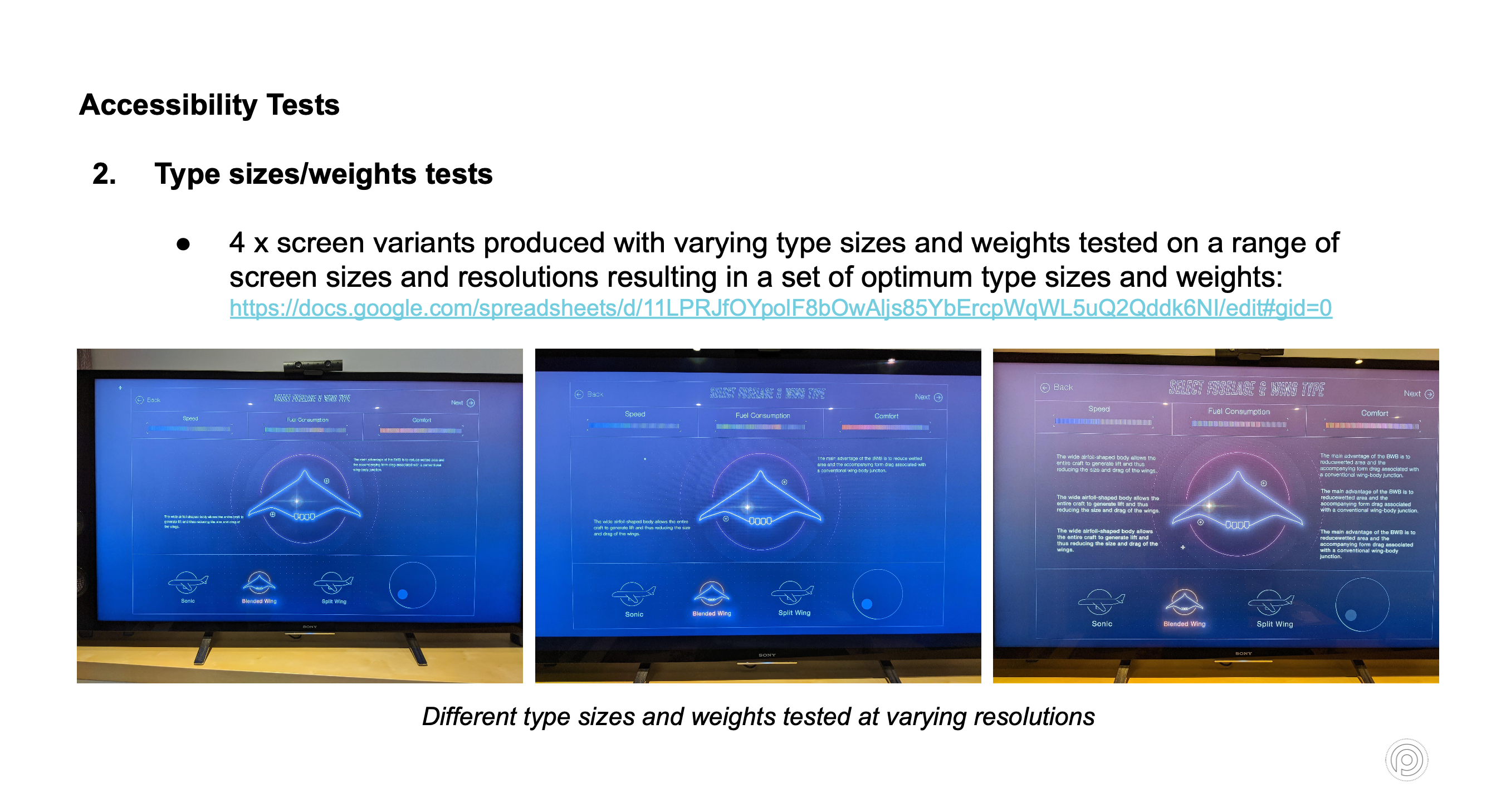
Gesture Evaluation
To support a set of novel interactive experiences, new gestures and gesture cues were being introduced across several touchscreen interfaces. I evaluated these interactions and documented where gesture direction, signifiers and feedback were likely to cause confusion.
The resulting recommendations helped simplify gesture language and improve the clarity of gesture representation, making the interfaces easier to learn and more intuitive for first-time users.
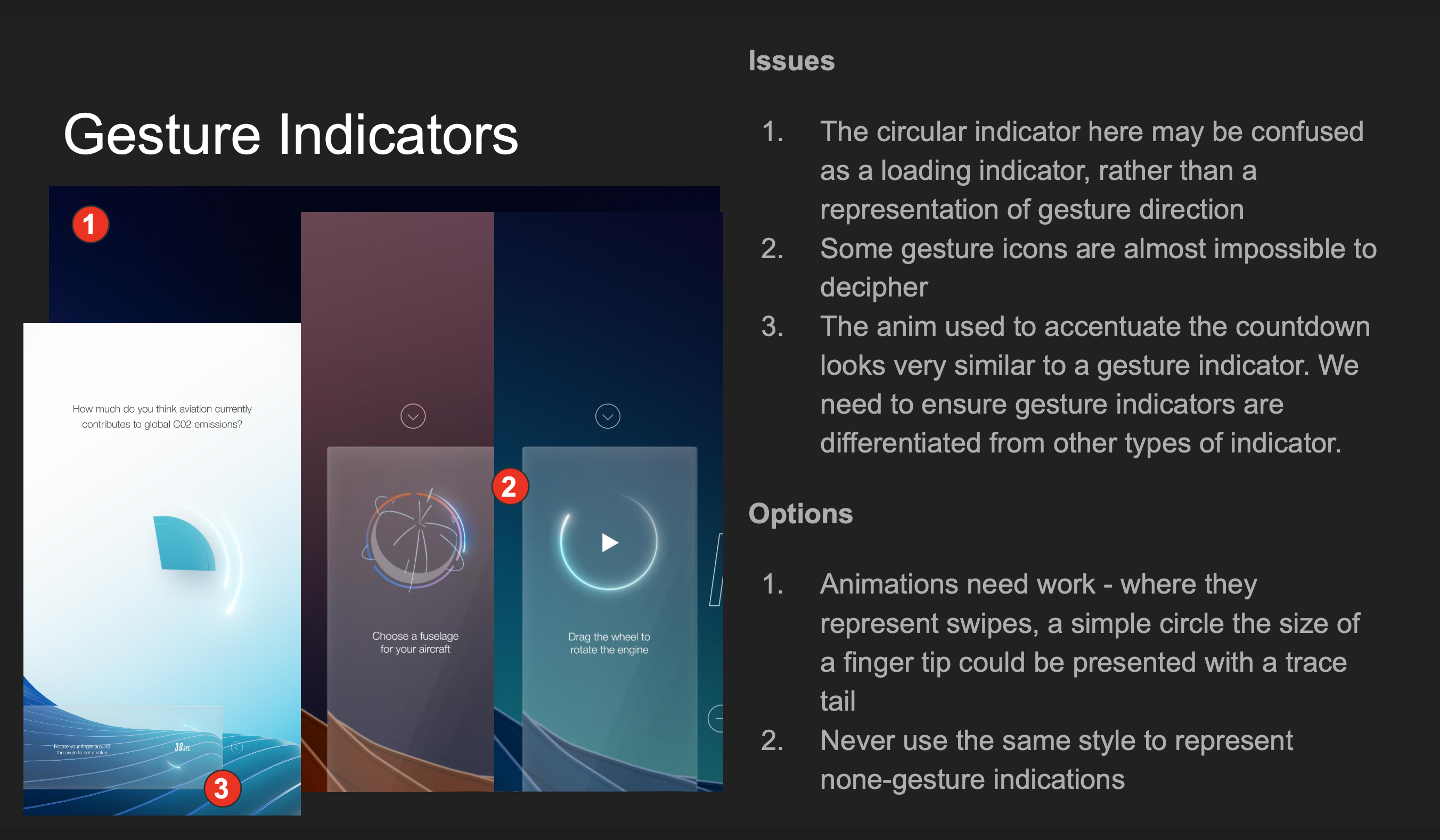
Ergonomics Evaluation
Each of the six experiences used different hardware, screen sizes and orientations, so ergonomics had to be assessed for every setup individually.
This included reviewing whether wheelchair users and other visitors could comfortably reach interface elements on both vertical and horizontal screens, some of them very large. These evaluations led to a set of practical ergonomic guidelines that informed the placement of controls, content and touch targets across the installation.
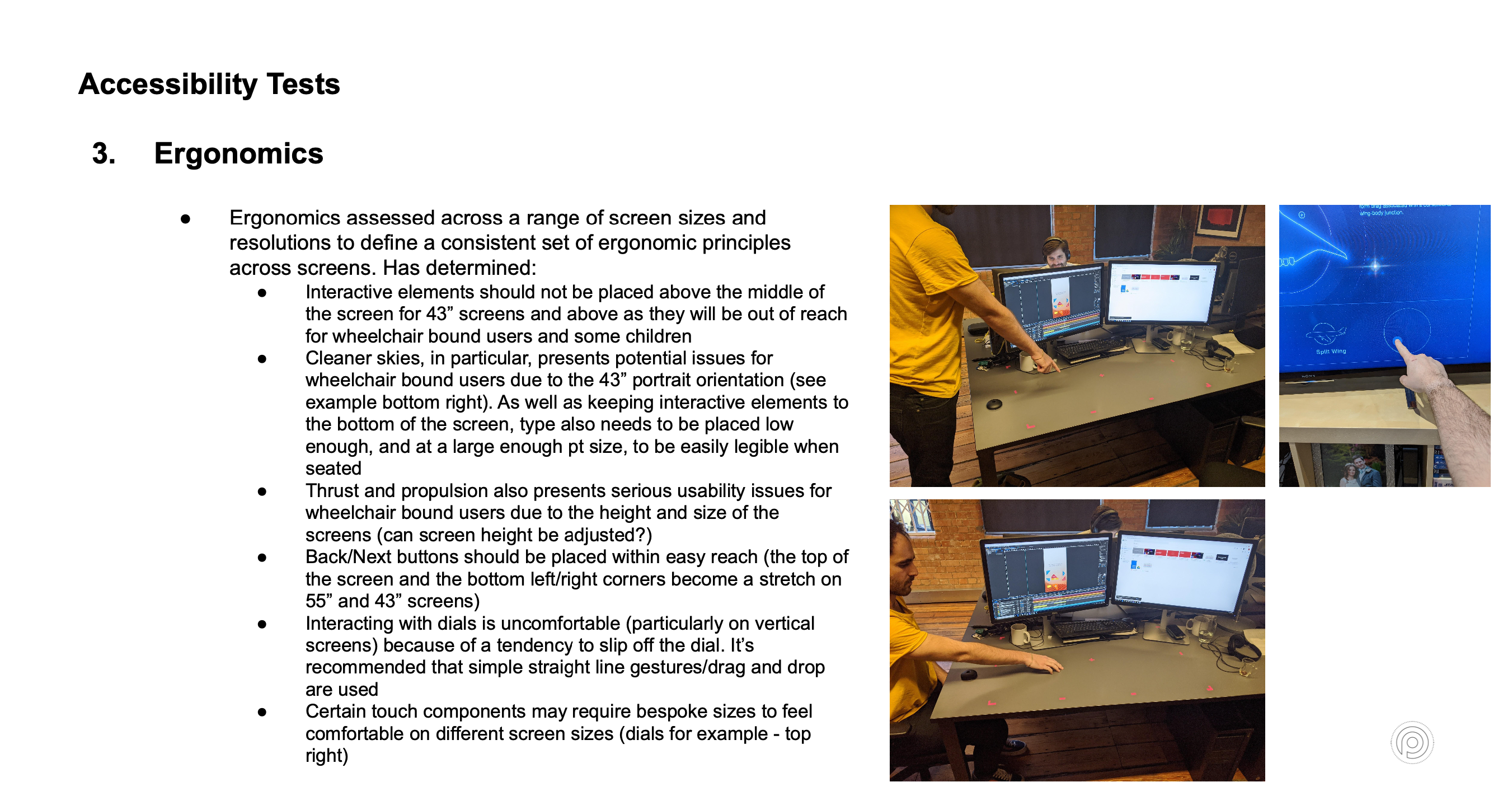
UI Flows
Once the accessibility and physical interaction principles were clear, I defined the flow logic for each experience. This helped identify how visitors would move through each installation and where friction, confusion or dead ends might occur.
Below is an example from the VR experience, which immersed users in an interactive flight of the future.
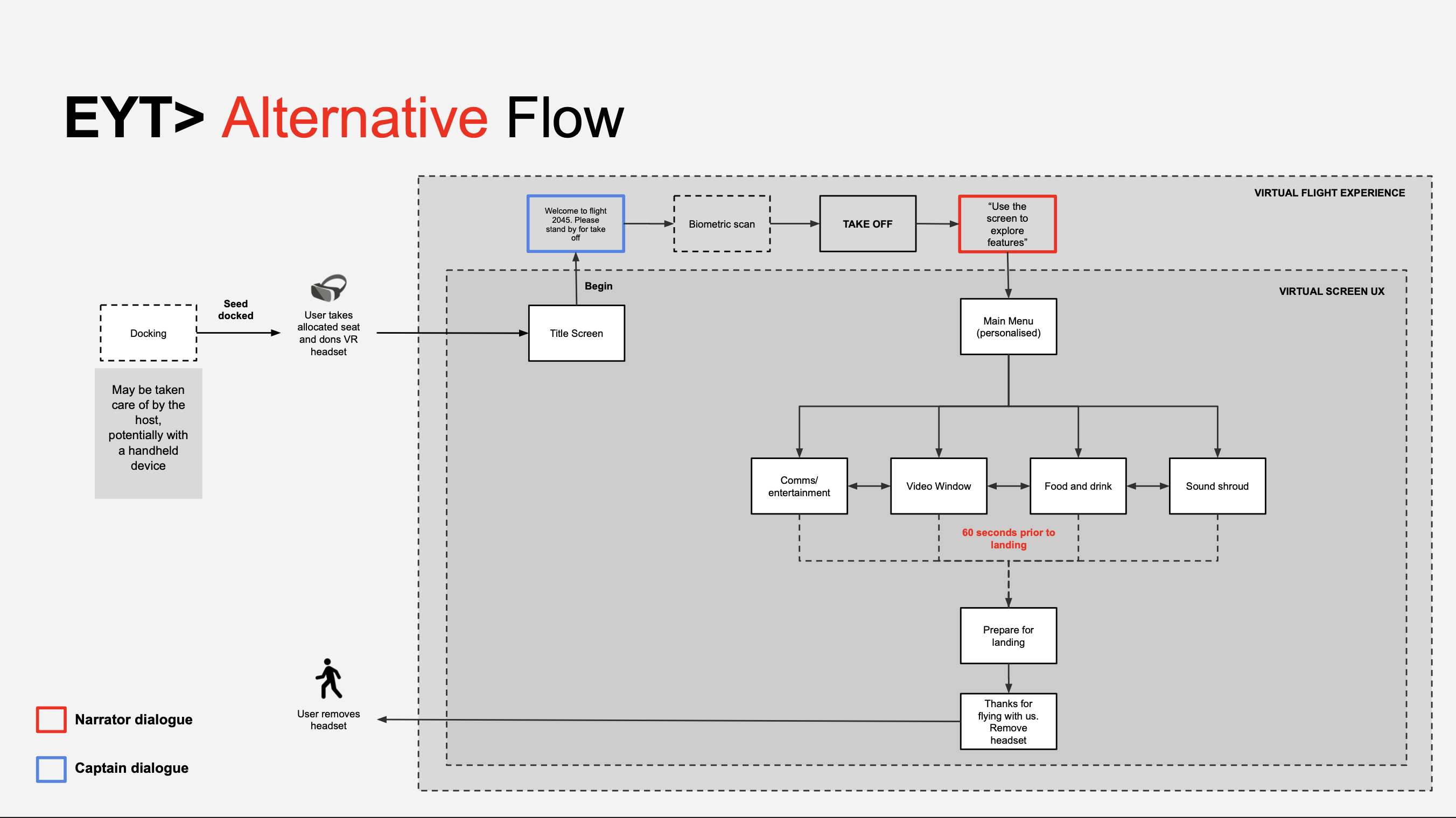
Alternative Journey Modelling
In addition to the main flows, alternative routes were mapped to test different narrative and interaction structures. This made it possible to compare onboarding approaches, transitions between physical and virtual moments, and the way storytelling could support comprehension throughout the experience.
Walkthroughs & Wireframes
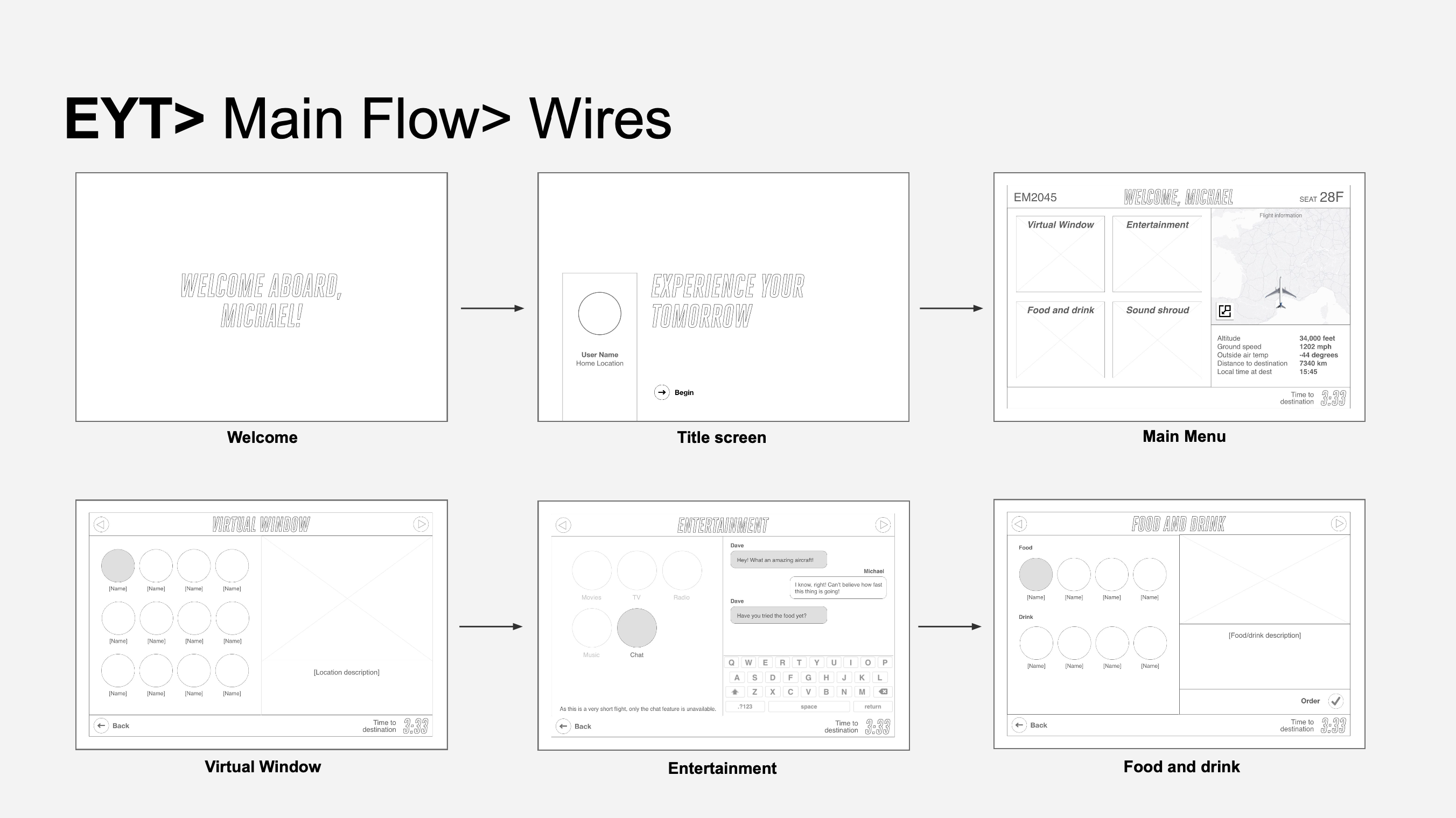
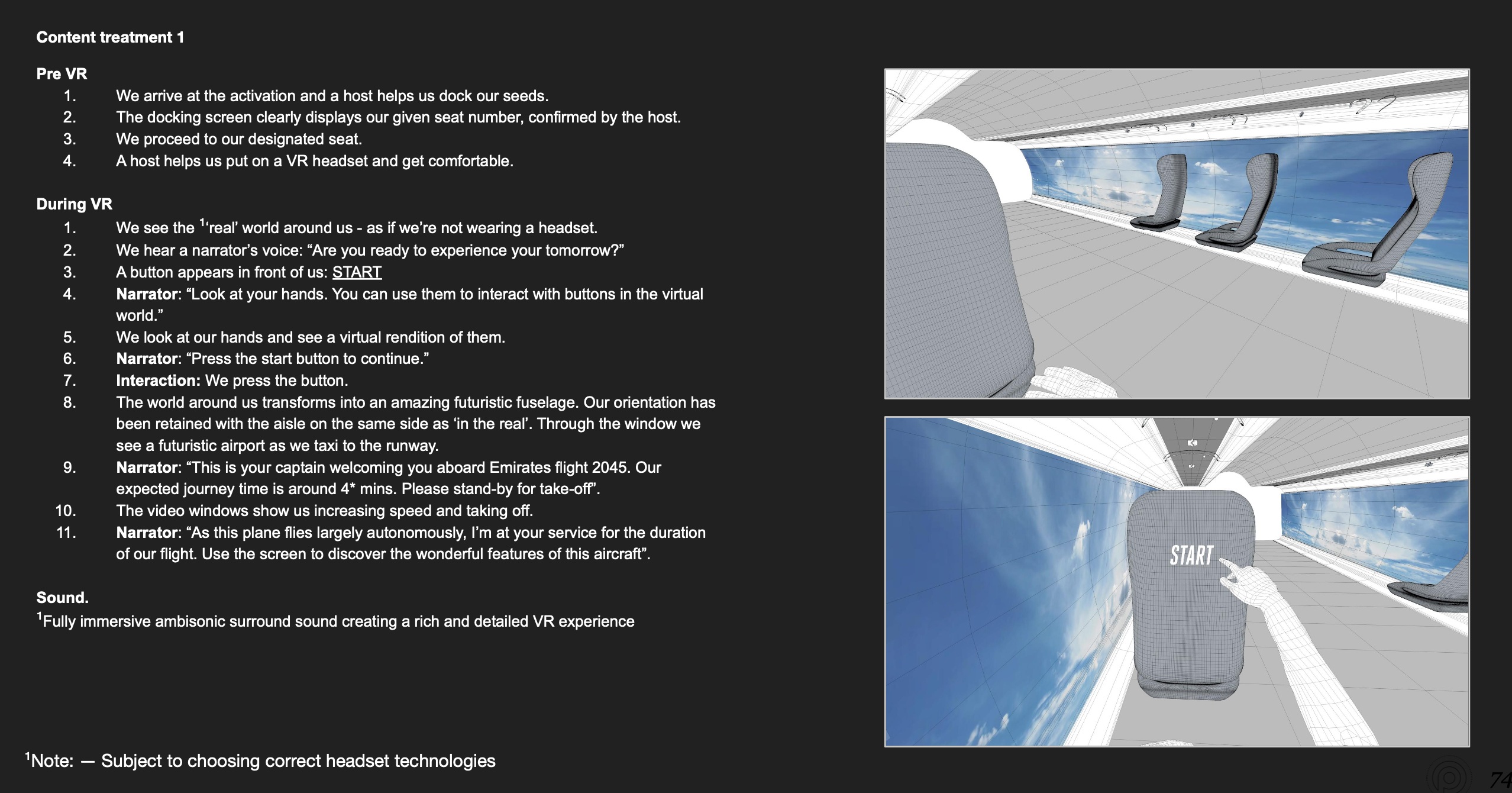
For each experience, concepts were developed into walkthroughs and detailed wireframe flows. These artefacts made it possible to align teams around the intended interaction model before moving into implementation.
The examples shown here are taken from the VR experience, Experience Your Tomorrow, which was designed to immerse visitors in a speculative future flight.
Development & Outcome
The next phase of the project was planned to be implementation and testing. That work was disrupted by Covid, which forced the wider programme onto hold.
The designs were eventually implemented, and Expo 2020 Dubai ultimately ran from 1 October 2021 to 31 March 2022, attracting over 24 million visitors.
You can view the implemented experiences in the showcase video below: