Roche Neuroscience
The Challenge
Roche, one of the world’s largest pharmaceutical companies, asked me to design a touchscreen experience to showcase its neuroscience portfolio at the American Academy of Neurology conference.
The brief was not simply to present information, but to create something visually compelling enough to stand out in a busy conference environment while still helping healthcare professionals quickly access content that was directly relevant to their specialist interests.

User Research & Personas
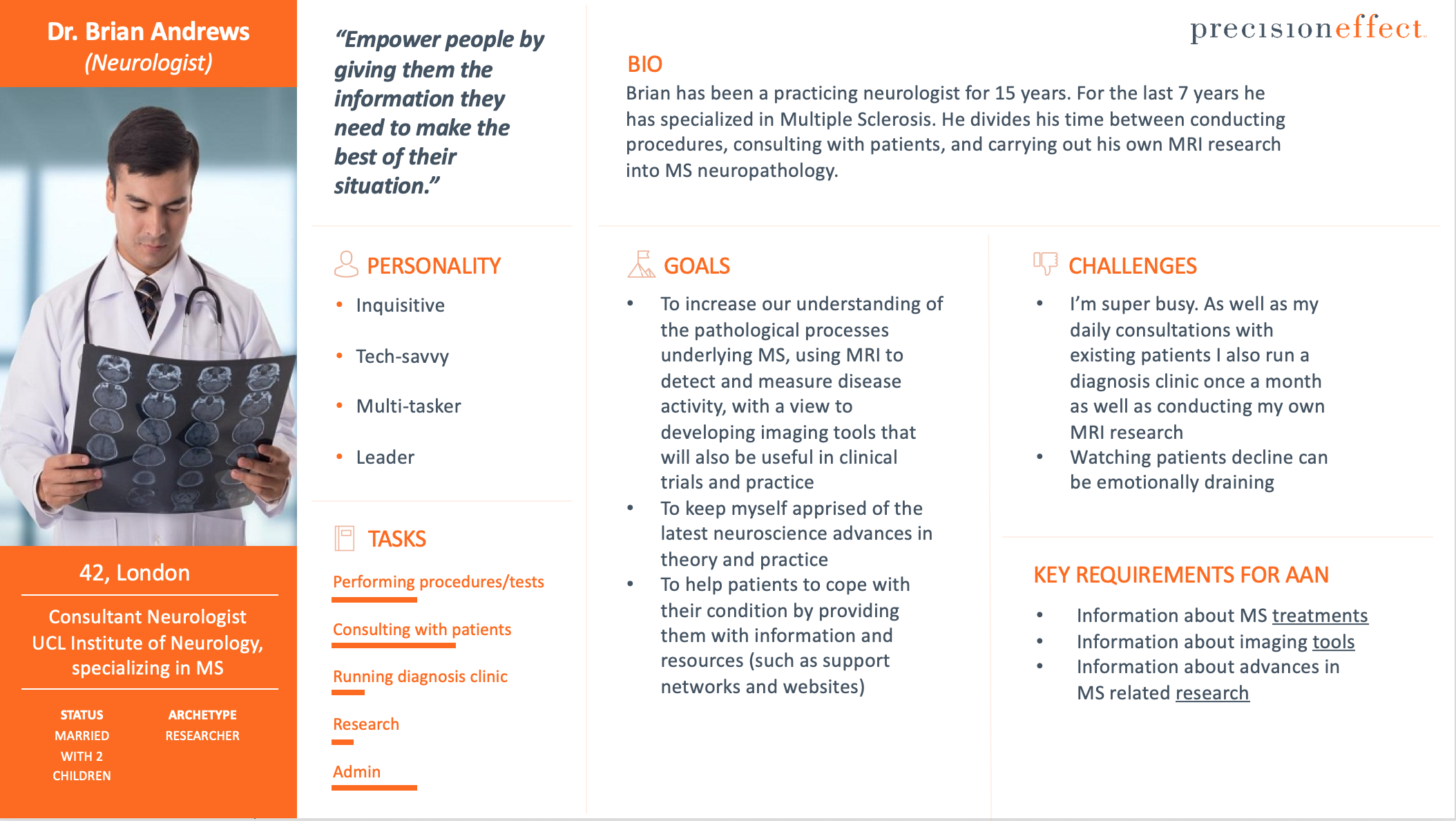
The target audience for the experience was healthcare professionals working in neuroscience. Roche had already gathered a substantial body of research into their behaviours, goals and working patterns, which I reviewed in depth to build a more concrete picture of the conference delegate we were designing for.
This work helped identify the core information needs of the audience: treatment information, practical tools and the latest research advances. It also clarified the need for content to be concise, immediately relevant and easy to scan.
Experience Mapping
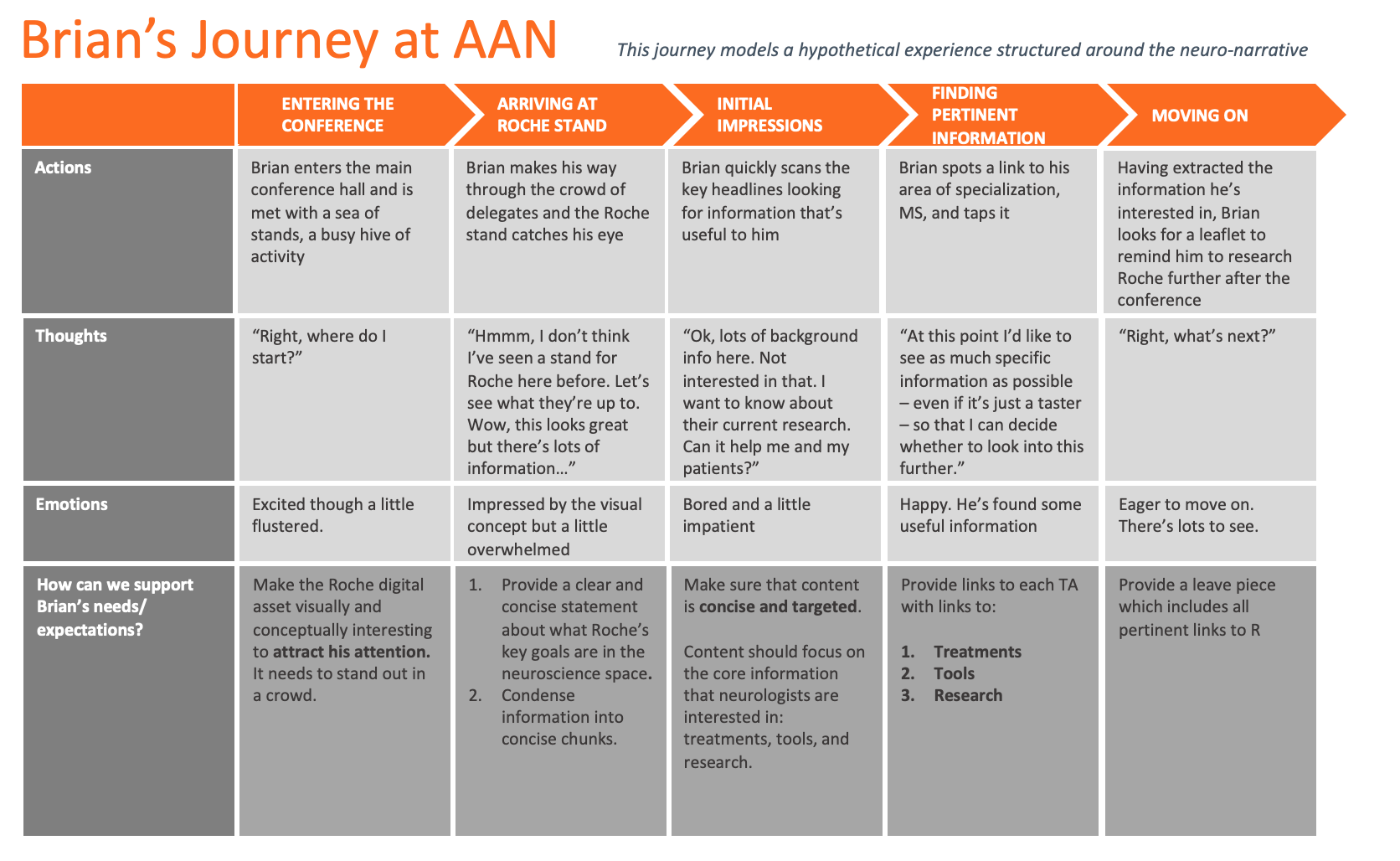
Using the persona, conference context and stand location, I modelled a hypothetical delegate journey through the event. This helped me understand how attention would be won, what competing stimuli the user would be dealing with and when they would be most receptive to different types of content.
The experience map highlighted three critical requirements: the experience needed to be visually arresting enough to draw people in, the content needed to be concise and bite-sized, and the information architecture needed to let delegates get to their area of interest quickly.
Information Architecture
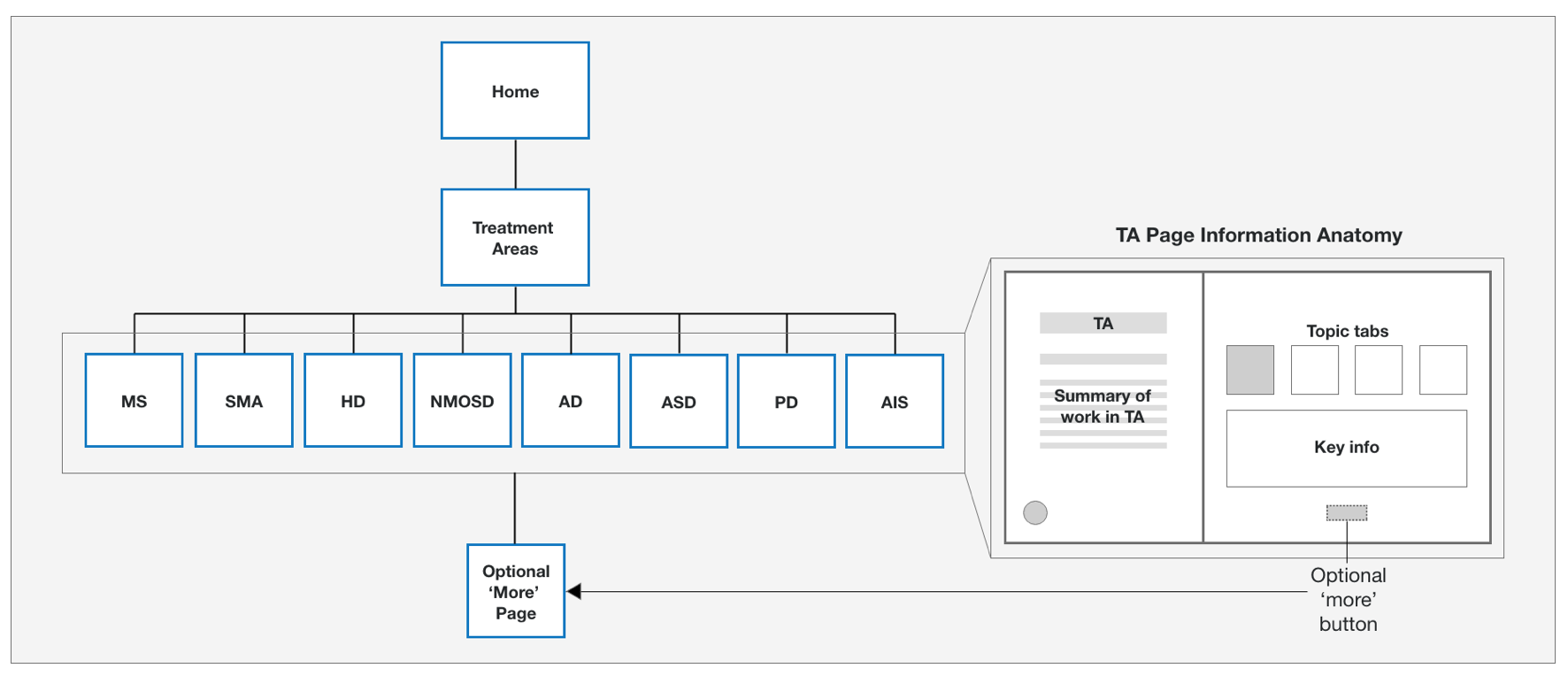
Once the user needs were clear, I worked with the client to determine what content would actually appear in the experience. After reviewing Roche’s neuroscience portfolio in detail, I structured the information around core treatment areas and then organised the content into a set of clear categories including treatments, tools and research.
This created a practical foundation for navigation and ensured the experience could support both rapid scanning and deeper exploration when needed.
Concepting
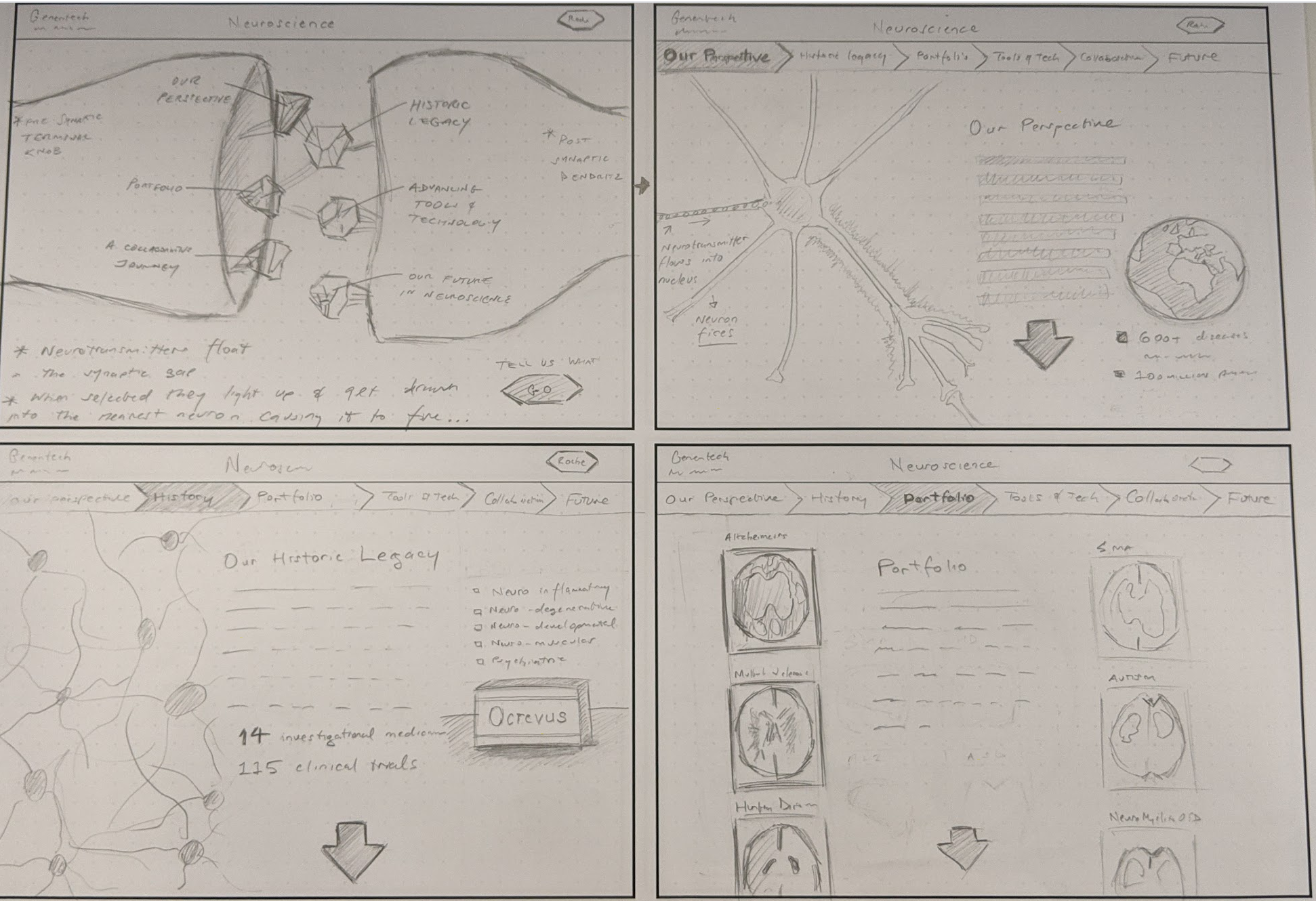
With the requirements established, I explored how the experience could feel distinctive, memorable and appropriate to the neuroscience theme. The team needed something that would feel conceptually rich while still remaining clear and usable.
I sketched a number of early concepts to prompt discussion and to help the team explore how neuroscience themes, information layers and interactive moments might be expressed spatially and visually.
Wireframes & Prototyping
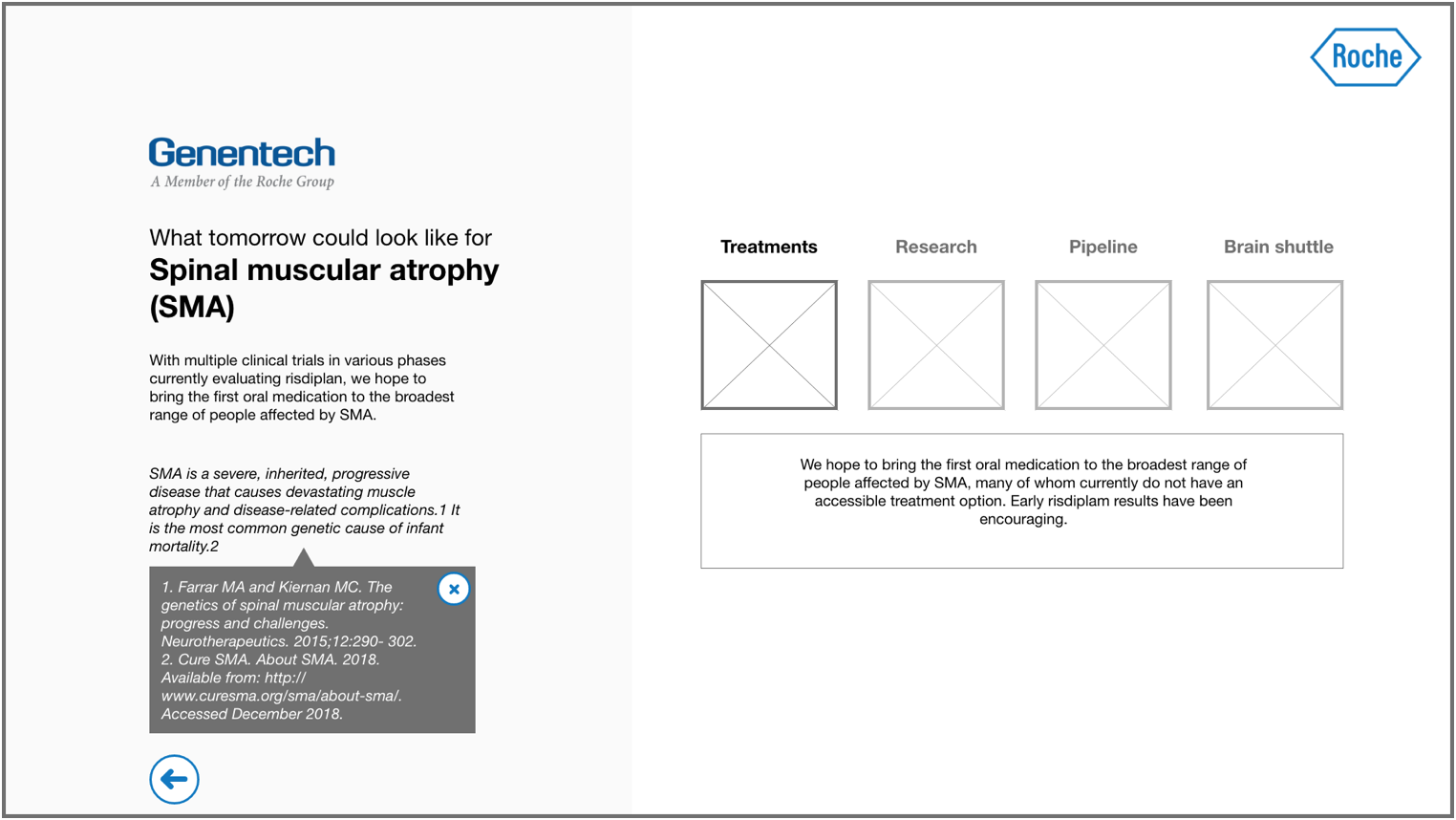
Following the IA work, I moved into wireframing and prototyping. This happened in parallel with copy development so that content could be tested in context and the structure refined as the design evolved.
Working this way made it easier to assess how quickly users could orient themselves, whether the right information surfaced at the right time and how effectively the experience balanced atmosphere with clarity.
Prototype: View the Adobe XD prototype
Visual Design
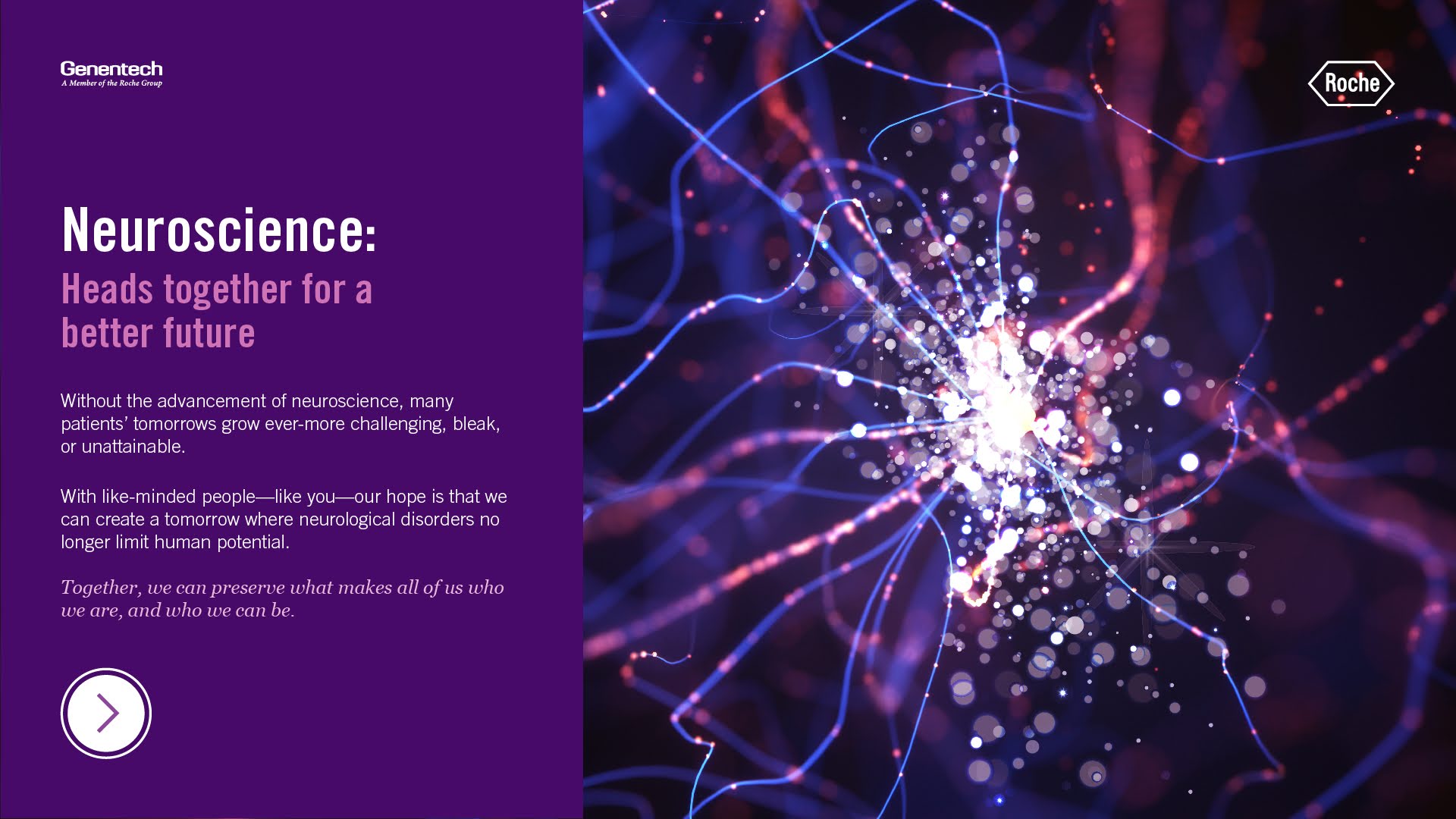
Once the wireframes had been validated, I collaborated with a visual designer to further develop the final look and feel. This included exploring iconography, typography, transitions and the most effective ways to represent treatment areas and neuroscience themes within the visual language.
The resulting designs aimed to balance scientific credibility with a distinctive, attention-grabbing aesthetic suited to a major conference environment.
Visual prototype: View the visual prototype
Accessibility Assessment
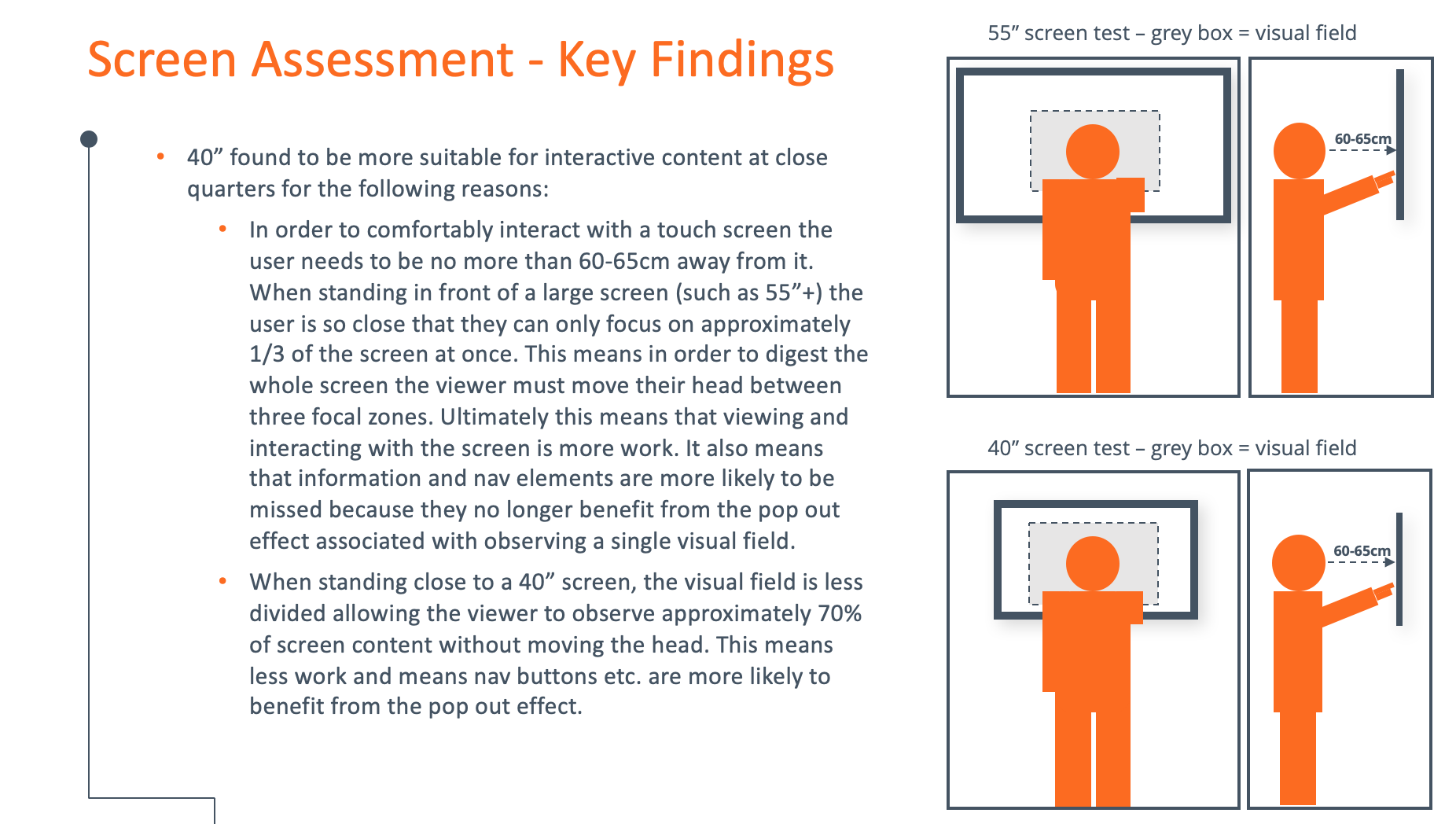
Because the experience would be presented on a public touchscreen at a conference, accessibility was a core requirement. I assessed multiple visual concepts across different screen sizes including 40-inch, 55-inch and 65-inch displays.
For each concept and screen size I reviewed copy legibility, contrast, touch interaction, button sizing and general ease of use. I also considered how visually arresting each concept would be, since attracting delegates to the kiosk was itself a critical part of the experience.
These assessments helped determine the most effective combination of concept, screen size, typography and interaction model.
Outcome
By the end of the design phase, the touchscreen experience had a clear narrative, a robust content structure and a visual direction tailored to the specific pressures of the conference environment.
Development of the experience was completed, but planned user testing was postponed due to Covid-19. At the time, the expectation was that the conference would proceed the following year.